
Leadership Thought: Exploring Stablecoins and Their Role in Crypto Payments

Leadership Thought: Exploring Stablecoins and Their Role in Crypto Payments

Stablecoins have emerged as a pivotal component, offering a bridge between the volatile nature of digital currencies and the stability of traditional fiat money. Anndy Lian, a best-selling book author, and Tran Hung, CEO of UQUID, explore the adaptability of stablecoins in crypto payments and their potential to revolutionize the financial landscape.

Stablecoins are digital currencies pegged to a stable asset, such as the US dollar, to minimize price volatility. As they become integral to the crypto ecosystem, understanding their impact on finance and daily transactions is crucial. This episode brings together two thought leaders to discuss the current state and future potential of stablecoins in the world of payments.

The Role of Stablecoins in the Cryptocurrency Ecosystem
Anndy Lian emphasizes that stablecoins serve as a crucial element in the cryptocurrency ecosystem, acting as a stable medium for transactions. They provide a familiar denomination for users, akin to the US dollar, facilitating easier and more understandable transactions. Stablecoins also encourage broader adoption of cryptocurrencies by offering a less volatile alternative for payments and investments.

Tran Hung highlights the impact of stablecoins in emerging markets, where fiat currencies often face devaluation. Stablecoins offer a reliable store of value, allowing users to preserve their purchasing power. In UQUID’s ecosystem, stablecoins have become a preferred payment method, enabling users to make purchases without worrying about currency fluctuations.

Stablecoins and Cross-Border Payments
Stablecoins are revolutionizing cross-border payments by offering faster, cheaper, and more transparent transactions compared to traditional methods. Tran Hung notes that stablecoins enable instant settlements, reducing the time and cost associated with cross-border transactions. This transparency and efficiency make stablecoins an attractive option for global commerce.

Anndy Lian adds that the transparency of blockchain technology enhances the security of cross-border payments. Transactions can be easily tracked and verified, providing an additional layer of security. Moreover, the stability of stablecoins compared to other cryptocurrencies makes them a preferred choice for international transactions.

The Future of Stablecoins and Central Bank Digital Currencies (CBDCs)
As central banks explore the development of their own digital currencies, the relationship between stablecoins and CBDCs becomes a topic of interest. Anndy Lian believes that stablecoins and CBDCs can coexist, serving different purposes. While stablecoins facilitate quick and low-cost transactions, CBDCs can act as a stable store of value within domestic markets.

Tran Hung agrees, noting that CBDCs are likely to operate on private blockchains, focusing on local transactions and government-related payments. In contrast, stablecoins, built on public blockchains, offer global accessibility and can be used across borders. This distinction allows both forms of digital currency to complement each other in the evolving financial landscape.

The Dominance of USDT in the Stablecoin Market
USDT, or Tether, has maintained its dominance in the stablecoin market due to its first-mover advantage and widespread adoption. Anndy Lian attributes USDT’s success to its early entry into the market and its ability to capture significant liquidity. Despite controversies, USDT has established itself as a reliable and widely used stablecoin.

Tran Hung emphasizes the trust that users have in USDT, particularly in emerging markets where stablecoins offer a solution to currency devaluation. The liquidity and accessibility of USDT make it a preferred choice for both individual users and large institutions.

The Future of Crypto Payments
Looking ahead, both experts envision a future where stablecoins play a central role in crypto payments. Anndy Lian hopes to see a diversification of payment methods, with other cryptocurrencies gaining traction alongside stablecoins. He believes that embracing a variety of digital currencies can drive further adoption and innovation in the crypto space.

Tran Hung sees stablecoins as a gateway to broader cryptocurrency adoption, particularly in regions with unstable fiat currencies. He anticipates that stablecoins will continue to gain popularity, offering a stable and efficient payment method for everyday transactions.

Conclusion
Stablecoins are not just a trend but a transformative force in the world of payments and commerce. From enabling cross-border transactions to providing a stable store of value, stablecoins are reshaping the financial landscape. As we look to the future, the continued evolution and adoption of stablecoins will play a crucial role in driving financial inclusion and innovation.


Anndy Lian is an early blockchain adopter and experienced serial entrepreneur who is known for his work in the government sector. He is a best selling book author- “NFT: From Zero to Hero” and “Blockchain Revolution 2030”.

Currently, he is appointed as the Chief Digital Advisor at Mongolia Productivity Organization, championing national digitization. Prior to his current appointments, he was the Chairman of BigONE Exchange, a global top 30 ranked crypto spot exchange and was also the Advisory Board Member for Hyundai DAC, the blockchain arm of South Korea’s largest car manufacturer Hyundai Motor Group. Lian played a pivotal role as the Blockchain Advisor for Asian Productivity Organisation (APO), an intergovernmental organization committed to improving productivity in the Asia-Pacific region.

An avid supporter of incubating start-ups, Anndy has also been a private investor for the past eight years. With a growth investment mindset, Anndy strategically demonstrates this in the companies he chooses to be involved with. He believes that what he is doing through blockchain technology currently will revolutionise and redefine traditional businesses. He also believes that the blockchain industry has to be “redecentralised”.

j j j

DeCC Day Token 2049 Singapore – Use Cases With Commercial Application

DeCC Day Token 2049 Singapore – Use Cases With Commercial Application

During the Token 2049 week in Singapore, the DeCC event hosted a panel discussion titled “Use Cases with Commercial Applications.” Moderated by Anndy Lian, a book author and governmental blockchain advisor, the panel featured prominent figures in the blockchain industry: Gavin Thomas, Co-Founder of TEN Protocol; Josh Wyant, Founder of Novapolis; Cal, Lead Developer at SquidGrow and SilentSwap; and Juan Mari, CEO of Blok Assets. The discussion delved into the practical applications of blockchain technology, focusing on privacy, regulatory challenges, and the potential for blockchain to revolutionize various industries.

The panel began with introductions, setting the stage for a deep dive into the commercial applications of blockchain. Juan Mari introduced Blok Assets, a firm based in Puerto Rico that builds legal structures within the SEC and FCA frameworks to tokenize assets. Gavin Thomas highlighted TEN Protocol’s work on an encrypted layer 2 for Ethereum, while Josh Wyant described Novapolis as a decentralized cloud platform with a community-centric approach. Cal, representing SilentSwap, explained their focus on privacy swaps powered by the Secret Network, enabling asset exchanges across multiple EVM chains.

The discussion quickly turned to privacy, a critical aspect of blockchain technology. The panelists shared various case studies illustrating the importance of privacy in commercial applications. Gavin Thomas cited the Italian banking system’s use of an enterprise-grade blockchain, which incorporates privacy into its design. He emphasized the potential benefits of moving to public blockchains with confidential computing, which could reduce vendor lock-in and foster competition, ultimately benefiting consumers.

Cal shared insights from SilentSwap’s journey, initially targeting consumer users but later attracting business clients who also required privacy. He highlighted the need for privacy in business transactions, where competitors should not have access to each other’s financial details. This need for privacy extends to various scenarios, such as venture capitalists being copy-traded or competitive traders being front-run by rivals. SilentSwap is now developing a business-to-business SDK to address these privacy concerns.

Juan Mari pointed out the lack of protocols for transfer agents in the tokenization of real-world assets. He stressed the need for a transfer agent with robust data privacy layers, especially when dealing with regulatory bodies like the SEC and FCA. The absence of such a solution presents a significant opportunity for innovation in the blockchain space.

The conversation then shifted to the role of confidential computing in governance and regulatory compliance. The panelists discussed how confidential computing could enable secure voting and other governance applications while maintaining privacy. They acknowledged the challenges governments face in balancing privacy with regulatory requirements, such as anti-money laundering (AML) and know-your-customer (KYC) processes. The panelists emphasized the importance of educating regulators about the benefits of blockchain technology and the potential for confidential computing to enhance security and privacy.

Anndy Lian raised the issue of privacy in the context of meme projects, questioning its importance in such communities. The panelists agreed that privacy remains crucial, even in meme projects, as it allows developers and traders to maintain anonymity and protect their identities. They shared anecdotes of individuals who have faced challenges due to a lack of privacy, underscoring the need for solutions that enable users to control their data and identities.

The panel also addressed the challenges of promoting and educating users about blockchain technology. They noted that many blockchain projects struggle to communicate their value propositions effectively, often using complex terminology that alienates potential users. The panelists suggested simplifying the user experience and abstracting away the complexity of blockchain to drive adoption. They emphasized the need for a “killer app” that showcases the benefits of blockchain without requiring users to understand the underlying technology.

In discussing the future of blockchain, the panelists expressed optimism about its potential to transform industries such as trade finance. They highlighted the inefficiencies in traditional trade finance processes, which involve extensive paperwork and reliance on third parties. Blockchain technology, with its ability to facilitate secure and transparent transactions, could streamline these processes and reduce friction. The panelists envisioned a future where blockchain underpins global trade finance, enabling more efficient and secure transactions.

The panel concluded with a discussion on emerging use cases for decentralized applications (dApps) that offer significant value for commercial adoption. They identified trade finance, real-world asset tokenization, and privacy-preserving advertising as areas ripe for innovation. The panelists also highlighted the potential for confidential computing to extend beyond web 3.0, enabling web 2.0 applications to incorporate privacy-preserving features.

Overall, the panel discussion at DeCC provided valuable insights into the commercial applications of blockchain technology. The panelists highlighted the importance of privacy, the challenges of regulatory compliance, and the potential for blockchain to revolutionize industries. As blockchain technology continues to evolve, it holds the promise of transforming how businesses operate, offering new opportunities for innovation and growth.

Anndy Lian is an early blockchain adopter and experienced serial entrepreneur who is known for his work in the government sector. He is a best selling book author- “NFT: From Zero to Hero” and “Blockchain Revolution 2030”.

Currently, he is appointed as the Chief Digital Advisor at Mongolia Productivity Organization, championing national digitization. Prior to his current appointments, he was the Chairman of BigONE Exchange, a global top 30 ranked crypto spot exchange and was also the Advisory Board Member for Hyundai DAC, the blockchain arm of South Korea’s largest car manufacturer Hyundai Motor Group. Lian played a pivotal role as the Blockchain Advisor for Asian Productivity Organisation (APO), an intergovernmental organization committed to improving productivity in the Asia-Pacific region.

An avid supporter of incubating start-ups, Anndy has also been a private investor for the past eight years. With a growth investment mindset, Anndy strategically demonstrates this in the companies he chooses to be involved with. He believes that what he is doing through blockchain technology currently will revolutionise and redefine traditional businesses. He also believes that the blockchain industry has to be “redecentralised”.

j j j

Panel Discussion: The Ideal Recipe for KOL Strategy

Panel Discussion: The Ideal Recipe for KOL Strategy

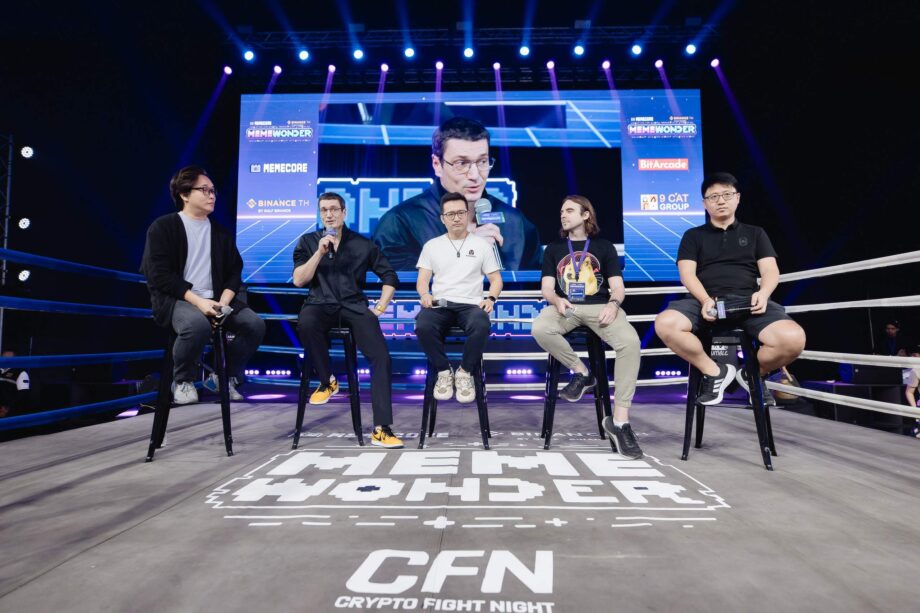
A panel of crypto KOLs (Key Opinion Leaders) convened to dissect “The Ideal Recipe for KOL Strategy” in 2024. Moderated by the insightful Joy Song, the panel featured a diverse group of voices: Anndy Lian, a seasoned investor and author; MAD CRIPTO, a fund manager building the innovative “Knights” project; Your Crypto DJ, a DJ and prominent voice in the meme coin space; and Sandro Crypto, an advocate for utility and education.

The discussion kicked off with a question on the hottest narratives of 2024. While acknowledging the allure of AI and liquid staking, the panelists highlighted the persistent dominance of meme coins. Anndy Lian emphasized the importance of community engagement, noting that meme coins, despite often lacking inherent utility, thrive on the strength of their communities. MAD CRIPTO echoed this sentiment, pointing out that meme coins offer a simplified entry point for new investors, contributing to their explosive growth.

However, the panel acknowledged the double-edged sword of meme coins. Your Crypto DJ, a self-proclaimed meme coin enthusiast, appreciated their transparency – they are what they are, pure community-driven gambles. Sandro Crypto, on the other hand, expressed concern over the speculative frenzy they incite, emphasizing the need for education and a focus on projects with genuine utility.

The conversation then shifted to the impact of platforms like Pump & Dump, which have democratized token launching. While acknowledging its role in simplifying the process, Your Crypto DJ expressed concern over the platform’s potential to drain liquidity, leading to short-lived tokens.

The panelists agreed that discerning quality projects amidst the meme coin deluge is crucial. Sandro Crypto highlighted the evolving role of KOLs, emphasizing the need for projects to move beyond superficial engagement and recognize the value of authentic community building. He cited the example of node sales, where KOLs with dedicated communities demonstrably drove significant investment.

Anndy Lian stressed the importance of content quality and transparency, urging KOLs to prioritize their audience’s financial well-being over short-term gains from shilling dubious projects. He argued that a KOL’s true value lies in their ability to empower their community with knowledge and guide them towards profitable, sustainable projects.

The discussion concluded with a reflection on the future of the KOL landscape. Your Crypto DJ emphasized the importance of authenticity and building a genuine connection with one’s audience. Sandro Crypto reiterated his call for education and a focus on long-term value, urging aspiring KOLs to delve deeper into the technology and educate their audience on the fundamentals of blockchain and cryptocurrency.

The panel served as a microcosm of the evolving KOL landscape in 2024. While meme coins and short-term gains continue to dominate the conversation, there’s a growing recognition of the need for substance, education, and a focus on long-term value. As the industry matures, the KOLs who thrive will be those who can adapt to this changing landscape, prioritize their community’s best interests, and provide genuine value beyond fleeting hype cycles.

Cointelegraph, Newtribe Capital, ABCDE Capital, and Myco organized this event in Singapore on 18 September during the Token 2049 week.

Anndy Lian is an early blockchain adopter and experienced serial entrepreneur who is known for his work in the government sector. He is a best selling book author- “NFT: From Zero to Hero” and “Blockchain Revolution 2030”.

Currently, he is appointed as the Chief Digital Advisor at Mongolia Productivity Organization, championing national digitization. Prior to his current appointments, he was the Chairman of BigONE Exchange, a global top 30 ranked crypto spot exchange and was also the Advisory Board Member for Hyundai DAC, the blockchain arm of South Korea’s largest car manufacturer Hyundai Motor Group. Lian played a pivotal role as the Blockchain Advisor for Asian Productivity Organisation (APO), an intergovernmental organization committed to improving productivity in the Asia-Pacific region.

An avid supporter of incubating start-ups, Anndy has also been a private investor for the past eight years. With a growth investment mindset, Anndy strategically demonstrates this in the companies he chooses to be involved with. He believes that what he is doing through blockchain technology currently will revolutionise and redefine traditional businesses. He also believes that the blockchain industry has to be “redecentralised”.

j j j