Innoblock 2024: Key Success Factors for Web3 Gaming Projects in a Competitive Landscape

Innoblock 2024: Key Success Factors for Web3 Gaming Projects in a Competitive Landscape


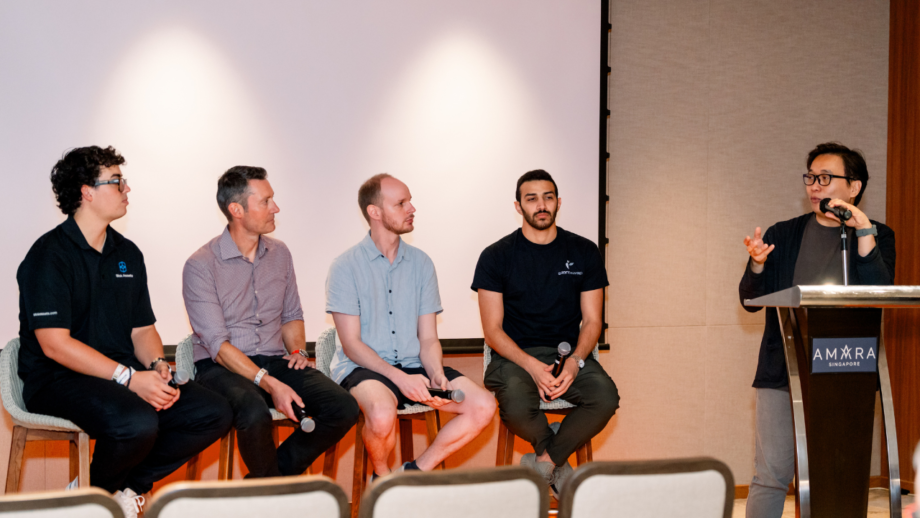
The Innoblock Summit 2024 hosted a panel discussion titled “From Concept to Reality: Key Success Factors for Web3 Gaming Projects in a Competitive Landscape.” Moderated by Anndy Lian, a blockchain advisor and author, the panel featured industry leaders: Aaron Goolsbey (COO, Mythical Games), Florence Li (CCO, METAY), Ricky Wong (Co-Founder, Catizen), JT (Marketing Lead, Seraph), and Alex S (Head of Eco Growth, GGI).

The discussion centered around the critical elements that contribute to a thriving Web3 gaming project. While acknowledging the importance of blockchain technology and tokenomics, panelists emphasized the need to prioritize engaging gameplay and compelling narratives.

Redefining Success Metrics in Web3 Gaming

Challenging the traditional focus on high conversion rates, Ricky Wong highlighted the importance of organic user engagement. Citing Catizen’s success, he suggested a conversion rate between 5% to 10% as a healthy benchmark for Web3 games, emphasizing the need to educate and onboard users from the traditional gaming sphere.

JT echoed this sentiment, emphasizing the importance of attracting and retaining real users, not just incentivized participants. He stressed the need for seamless onboarding experiences, allowing players to enjoy the game before delving into the complexities of Web3 elements.

Beyond Tokenomics: The Power of Narrative and User Experience

Florence Li emphasized the often-overlooked aspect of storytelling in Web3 gaming. She argued that compelling narratives, captivating art, and well-developed game mechanics are crucial for attracting and retaining players, ultimately driving the value of in-game assets.

Aaron Goolsbey challenged the industry to move beyond the Web2 versus Web3 dichotomy, advocating for a focus on enhancing the gaming experience as a whole. He argued that Web3 technology should be seamlessly integrated to enhance existing gaming paradigms, citing Mythical Games’ NFL Rivals as a prime example. The game, with its integrated NFT marketplace, saw a significant increase in player engagement and retention, demonstrating the power of Web3 in adding value for players.

Monetization and Sustainability: Lessons from Web2 and Beyond

Addressing the question of profitability, Aaron Goolsbey acknowledged the inherent challenges of the gaming industry, where only a small percentage of games achieve significant financial success. He stressed the importance of applying proven game development and business practices, regardless of the underlying technology.

JT provided insights into Seraph’s dual revenue stream model, combining traditional in-app purchases with Web3 elements like NFT marketplaces and asset upgrades. This approach caters to a wider audience, allowing players to engage with the game on their own terms.

The Rise of Telegram Mini-Games: A Gateway to Mass Adoption?

The panel explored the burgeoning trend of Telegram mini-games and their potential impact on the Web3 gaming landscape. Aaron Goolsbey expressed excitement about the opportunity for user acquisition and overcoming the hurdle of wallet creation. He envisioned Telegram’s existing infrastructure as a seamless gateway for onboarding new users into the Web3 gaming ecosystem.

Alex S highlighted the potential of Telegram mini-games to attract traditional game developers, further enriching the Web3 gaming space. He emphasized the need for robust developer tools and support systems to foster a thriving ecosystem.

Florence Li and JT expressed optimism about the accessibility and ease of use of Telegram mini-games, making them an ideal entry point for new users. They envisioned a future where Web3 games seamlessly integrate with popular platforms like Telegram, driving mass adoption.

User Acquisition and Retention: Building a Loyal Community

The panelists agreed that user acquisition and retention are paramount for long-term success. Aaron Goolsbey stressed the importance of continuously adding value for players through engaging content and a well-balanced in-game economy.

Florence Li advocated for simplifying the onboarding process, making it easier for new users to experience the benefits of Web3 gaming. She also stressed the importance of creating high-quality content and assets that resonate with players.

The Future of Web3 Gaming: A Collaborative Effort

Anndy Lian concluded with a shared sense of optimism about the future of Web3 gaming. The panelists emphasized the need for collaboration, innovation, and a focus on user experience to unlock the full potential of this emerging technology. As the lines between Web2 and Web3 continue to blur, the future belongs to games that can seamlessly integrate blockchain technology to deliver engaging, rewarding, and truly player-owned gaming experiences.

Anndy Lian is an early blockchain adopter and experienced serial entrepreneur who is known for his work in the government sector. He is a best selling book author- “NFT: From Zero to Hero” and “Blockchain Revolution 2030”.

Currently, he is appointed as the Chief Digital Advisor at Mongolia Productivity Organization, championing national digitization. Prior to his current appointments, he was the Chairman of BigONE Exchange, a global top 30 ranked crypto spot exchange and was also the Advisory Board Member for Hyundai DAC, the blockchain arm of South Korea’s largest car manufacturer Hyundai Motor Group. Lian played a pivotal role as the Blockchain Advisor for Asian Productivity Organisation (APO), an intergovernmental organization committed to improving productivity in the Asia-Pacific region.

An avid supporter of incubating start-ups, Anndy has also been a private investor for the past eight years. With a growth investment mindset, Anndy strategically demonstrates this in the companies he chooses to be involved with. He believes that what he is doing through blockchain technology currently will revolutionise and redefine traditional businesses. He also believes that the blockchain industry has to be “redecentralised”.
j j j

Panel Discussion- Navigating the Multi-Chain Future: Strategies for Seamless Integration

Panel Discussion- Navigating the Multi-Chain Future: Strategies for Seamless Integration

Blockchain technology is abuzz with talk of a multichain future, a future where different blockchains seamlessly interact, unlocking a new era of innovation and accessibility. But what does this future look like, and how will it impact both developers and everyday users?

Panel discussion at The Pheromones Party, organized by MemeCore tackled these very questions, bringing together leading minds in the multichain space to discuss the challenges, solutions, and ultimate potential of this evolving technology.

The conversation began with the fundamental concept of multichain compatibility—the ability for different blockchains to communicate and share data. The panelists agreed that this interoperability is crucial for the continued growth of the blockchain ecosystem, particularly as Layer 2 and Layer 3 solutions proliferate.

For developers, the rise of multichain presents both opportunities and challenges. On the one hand, it opens doors to building applications that leverage the unique strengths of different blockchains. On the other hand, it introduces development and user experience complexities.

Sara from ZkLink highlighted one key challenge: the need for a seamless user experience, one where users are not burdened with the technical intricacies of interacting with multiple chains. The ideal scenario, the panelists envisioned, is one where users remain blissfully unaware of the underlying technology, much like smartphone users don’t concern themselves with the specific chips powering their devices.

Security, naturally, emerged as a paramount concern. Antonio Liu, COO of Polyhedra, said, “As value bridges between chains, ensuring the integrity and security of these transactions becomes paramount. The panelists discussed various approaches, including zero-knowledge proofs and decentralized verification mechanisms, to mitigate risks and build trust in multichain interactions.”

Looking beyond the technical aspects, the discussion turned toward multichain technology’s practical implications and future applications. The panelists painted a picture of a future where blockchain transcends its financial roots and permeates various aspects of our digital lives.

One compelling vision involved leveraging blockchain for decentralized computing power. Imagine a world where individuals can seamlessly lend and borrow computing resources from each other, facilitated by blockchain’s secure and transparent nature. This could revolutionize industries like AI, where access to vast computing power is often a bottleneck for innovation.

Another key takeaway was the importance of focusing on blockchain’s fundamental value proposition—decentralization, security, and user ownership. While exploring new frontiers is exciting, the panelists emphasized the need to double down on delivering these core benefits to drive mass adoption.

Moderator of the panel Anndy Lian highlighted: “The path to a multichain future is not without its hurdles. Technical complexities, security concerns, and the need for seamless user experiences are some of the challenges. However, the potential rewards—a more interconnected, accessible, and user-centric blockchain ecosystem—make this a journey worth undertaking.”

He concluded, the future of blockchain is bright, and the continued development and adoption of multichain technology will play a pivotal role in shaping this exciting future.

The Pheromones Party is organized by MemeCore and co-hosted by OKX Wallet, OKX Ventures, and Shiba Inu.

Anndy Lian is an early blockchain adopter and experienced serial entrepreneur who is known for his work in the government sector. He is a best selling book author- “NFT: From Zero to Hero” and “Blockchain Revolution 2030”.

Currently, he is appointed as the Chief Digital Advisor at Mongolia Productivity Organization, championing national digitization. Prior to his current appointments, he was the Chairman of BigONE Exchange, a global top 30 ranked crypto spot exchange and was also the Advisory Board Member for Hyundai DAC, the blockchain arm of South Korea’s largest car manufacturer Hyundai Motor Group. Lian played a pivotal role as the Blockchain Advisor for Asian Productivity Organisation (APO), an intergovernmental organization committed to improving productivity in the Asia-Pacific region.

An avid supporter of incubating start-ups, Anndy has also been a private investor for the past eight years. With a growth investment mindset, Anndy strategically demonstrates this in the companies he chooses to be involved with. He believes that what he is doing through blockchain technology currently will revolutionise and redefine traditional businesses. He also believes that the blockchain industry has to be “redecentralised”.

j j j

Panel Discussion- Future of memecoin ecosystem: DApps and innovations

Panel Discussion- Future of memecoin ecosystem: DApps and innovations

Cryptocurrency is no stranger to fleeting trends, and meme coins are a prime example. While the initial hype surrounding these tokens often centers around viral moments and community enthusiasm, the question of long-term sustainability looms large. A recent panel discussion featuring prominent figures in the blockchain space discussed this issue, exploring the evolving landscape of meme coins and the crucial elements needed to thrive beyond the initial wave of enthusiasm.

The panelists, representing various projects and perspectives, agreed that while meme coins capitalize on cultural relevance and community engagement, their longevity hinges on offering tangible utility and value propositions beyond mere price speculation. Fuji, Eco Lead of IZUMI Finance, pointed out, “The biggest advantage meme coins have is their established community. The challenge lies in translating that community into a sustainable ecosystem with real-world applications.”

Several key trends emerged from the discussion, highlighting the evolving nature of meme coins and the path forward for projects seeking lasting impact. One prominent theme was the increasing focus on utility. Andrew Chen, CEO of FHERA, noted a shift from purely speculative assets to meme coins that offer tangible benefits, such as governance rights, access to exclusive communities, and integration within decentralized applications. This emphasis on utility, they argued, is crucial for attracting a broader user base and ensuring long-term viability.

Another significant trend identified was the importance of user experience. With the proliferation of blockchain projects, simplicity and ease of use are paramount. Panelists emphasized the need for meme coin projects to prioritize user-friendly interfaces and intuitive platforms that lower the barrier to entry for both seasoned crypto enthusiasts and newcomers alike. This accessibility, they argued, is essential for driving mainstream adoption and fostering a thriving ecosystem.

The discussion also touched upon the crucial role of storytelling in the meme coin space. While technical innovation and utility are undoubtedly important, the ability to craft a compelling narrative that resonates with the community is equally vital. Jared Schwartz, Galxe’s Strategy Advisor, stressed the importance of building strong brands, fostering community engagement, and communicating a clear vision for the future. Ultimately, they argued, the most successful meme coin projects will be those that can effectively weave together technology, community, and a captivating story.

Anndy Lian, the moderator for the session, concluded with a call for greater sustainability and a focus on long-term value creation within the meme coin landscape. While the initial hype surrounding these tokens can be fleeting, the underlying principles of community engagement, accessibility, and utility offer a blueprint for building projects that can withstand the test of time. As the meme coin space continues to evolve, the projects that prioritize these core elements will be best positioned to ride the wave of enthusiasm and establish a lasting legacy in the ever-changing world of cryptocurrency.

The Pheromones Party is organized by MemeCore and co-hosted by OKX Wallet, OKX Ventures, and Shiba Inu. This event is organized in conjunction with Korea Blockchain Week 2024.

Anndy Lian is an early blockchain adopter and experienced serial entrepreneur who is known for his work in the government sector. He is a best selling book author- “NFT: From Zero to Hero” and “Blockchain Revolution 2030”.

Currently, he is appointed as the Chief Digital Advisor at Mongolia Productivity Organization, championing national digitization. Prior to his current appointments, he was the Chairman of BigONE Exchange, a global top 30 ranked crypto spot exchange and was also the Advisory Board Member for Hyundai DAC, the blockchain arm of South Korea’s largest car manufacturer Hyundai Motor Group. Lian played a pivotal role as the Blockchain Advisor for Asian Productivity Organisation (APO), an intergovernmental organization committed to improving productivity in the Asia-Pacific region.

An avid supporter of incubating start-ups, Anndy has also been a private investor for the past eight years. With a growth investment mindset, Anndy strategically demonstrates this in the companies he chooses to be involved with. He believes that what he is doing through blockchain technology currently will revolutionise and redefine traditional businesses. He also believes that the blockchain industry has to be “redecentralised”.

j j j