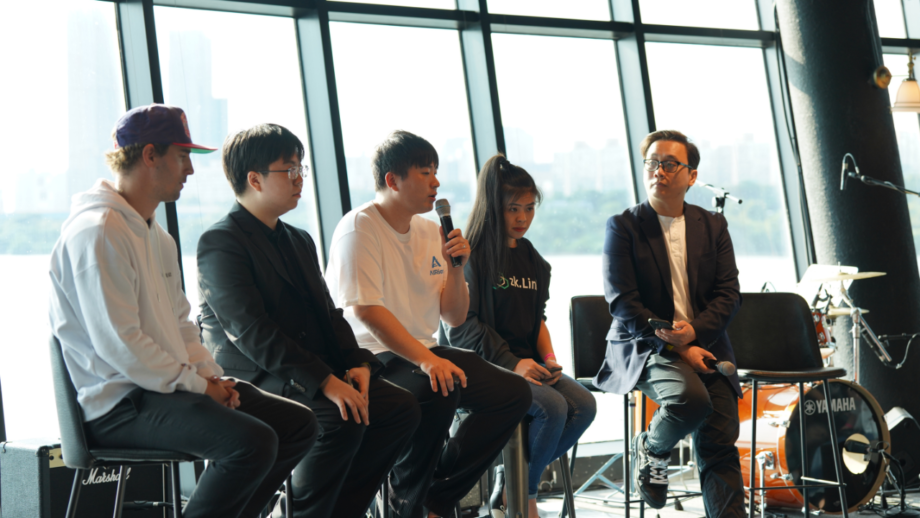
Panel Discussion: Memecoin – Bubble or Opportunity?

Panel Discussion: Memecoin – Bubble or Opportunity?


Fueled by online communities and viral marketing, these tokens, often bearing the faces of internet memes, have exploded in popularity, leaving many to wonder: are meme coins a fleeting bubble, a legitimate investment opportunity, or a cultural phenomenon reshaping the financial landscape?

A recent panel discussion at Pheromones Party, a side event of Korea Blockchain Week 2024, tackled this question, bringing together experts from various corners of the crypto ecosystem to share their insights.

The Allure of Volatility and Community

Ruben Brons, representing Flow Traders, a global market-making firm, highlighted the perspective of institutional players. While acknowledging the significant trading volume generated by meme coins, he emphasized that institutions are primarily driven by stability and regulated products. With its inherent volatility, the meme coin landscape doesn’t yet offer the security and structure that traditional institutions seek.

However, the panel agreed that the volume is a testament to the power of meme coins. Sam, Chief Business Development Officer at 1inch, a leading DEX aggregator, argued that meme coins have successfully onboarded a new generation of crypto users. Their familiarity with internet culture and meme-driven humor makes them more receptive to this entry point into the crypto world.

Claire Dang, Head of Growth at a prominent Web3 educational platform, echoed this sentiment, emphasizing the cultural significance of meme coins. She drew parallels between meme coins and the early days of NFTs, where shared ownership of digital assets fostered a sense of community and belonging. This cultural relevance, she argued, is a key factor in the sustainability of certain meme coins like Dogecoin and Shiba Inu, which have successfully cultivated dedicated communities around their brands.

Sustainability and the Institutional Question

While acknowledging meme coins’ community-building potential, the panel also addressed concerns about their long-term viability. Kevin, Head of Growth at Monad Labs, pointed out that the meme coin space is prone to rapid boom-and-bust cycles. While some tokens might experience explosive growth, many fade into obscurity just as quickly.

The question of institutional adoption also sparked debate. While some panelists, like Sam, believe that institutional interest in meme coins is still a long way off, others, like Anndy Lian, see the influx of capital into the broader crypto market as a positive sign, suggesting that institutions might eventually warm up to the idea of meme coins.

Navigating the Meme Coin Landscape

The panel concluded with a resounding message of caution for investors. While meme coins present a unique opportunity for profit, they also carry significant risks. Claire stressed the importance of education and due diligence, urging investors to thoroughly research any project before investing.

Anndy Lian ended the panel by saying, “The future of memes will mature into a more established asset class, attracting institutional capital and driving further innovation. For now, they remain a playground for retail investors, driven by speculation and fleeting trends, too. Only time will tell. However, one thing is clear: meme coins have tapped into a powerful cultural current, and their impact on the crypto ecosystem is undeniable.”

The Pheromones Party is organized by MemeCore and co-hosted by OKX Wallet, OKX Ventures, and Shiba Inu.

Anndy Lian is an early blockchain adopter and experienced serial entrepreneur who is known for his work in the government sector. He is a best selling book author- “NFT: From Zero to Hero” and “Blockchain Revolution 2030”.

Currently, he is appointed as the Chief Digital Advisor at Mongolia Productivity Organization, championing national digitization. Prior to his current appointments, he was the Chairman of BigONE Exchange, a global top 30 ranked crypto spot exchange and was also the Advisory Board Member for Hyundai DAC, the blockchain arm of South Korea’s largest car manufacturer Hyundai Motor Group. Lian played a pivotal role as the Blockchain Advisor for Asian Productivity Organisation (APO), an intergovernmental organization committed to improving productivity in the Asia-Pacific region.

An avid supporter of incubating start-ups, Anndy has also been a private investor for the past eight years. With a growth investment mindset, Anndy strategically demonstrates this in the companies he chooses to be involved with. He believes that what he is doing through blockchain technology currently will revolutionise and redefine traditional businesses. He also believes that the blockchain industry has to be “redecentralised”.


j j j

Panel Discussion: VC vs KOLs Investment Strategy

Panel Discussion: VC vs KOLs Investment Strategy

The crypto world is at a crossroads. A recent panel discussion at a crypto event brought together a diverse group of experts – a venture capitalist, a representative from a major blockchain platform, and several angel investors – to dissect the changing dynamics of fundraising in this volatile space.

The moderator set the stage by pointing to a noticeable trend: a “crisis of narratives.” While fleeting trends and meme coins grab headlines, the industry seems to be lacking a cohesive long-term vision. This lack of direction, coupled with the aftermath of high-profile failures, has made venture capitalists wary, leading to a noticeable tightening of the purse strings.

This cautious approach from traditional funding sources has opened the door for a new breed of investors. Angel investors and smaller funds, less burdened by the need for massive returns, are stepping in to support promising projects. This shift is not just about available capital; it’s about a fundamental change in how projects are being evaluated and supported.

The panelists agreed that the old playbook of relying solely on big-name VCs is becoming outdated. Projects are realizing the importance of building strong communities and attracting a diverse range of investors who bring more than just money to the table. Strategic guidance, network access, and marketing expertise are now viewed as equally valuable, especially in a market saturated with projects vying for attention.

This new landscape demands adaptability and creativity from both sides of the table. Founders need to think beyond traditional fundraising rounds and explore alternative models, such as community-driven initiatives and tokenized equity. VCs, on the other hand, need to evolve from being just financiers to becoming active partners, offering tangible value beyond their initial investment.

The panel discussion served as a reminder that the crypto space while facing challenges, is also ripe for reinvention. The current climate, though turbulent, presents a unique opportunity to build a more sustainable and community-driven ecosystem where innovation thrives on shared vision and collaborative effort.

This event, held in Seoul on 2 September 2024, is a side event organized by ICP, NewTribe, and Cointelegraph in conjunction with the Korea Blockchain Week (KBW). Panelists include David from UFVentures, Shashi Shekhar from ICP, Red from PickelsDAO, Petr Martynov from Morningstar Ventures, and best-selling author Anndy Lian.


Anndy Lian is an early blockchain adopter and experienced serial entrepreneur who is known for his work in the government sector. He is a best selling book author- “NFT: From Zero to Hero” and “Blockchain Revolution 2030”.

Currently, he is appointed as the Chief Digital Advisor at Mongolia Productivity Organization, championing national digitization. Prior to his current appointments, he was the Chairman of BigONE Exchange, a global top 30 ranked crypto spot exchange and was also the Advisory Board Member for Hyundai DAC, the blockchain arm of South Korea’s largest car manufacturer Hyundai Motor Group. Lian played a pivotal role as the Blockchain Advisor for Asian Productivity Organisation (APO), an intergovernmental organization committed to improving productivity in the Asia-Pacific region.

An avid supporter of incubating start-ups, Anndy has also been a private investor for the past eight years. With a growth investment mindset, Anndy strategically demonstrates this in the companies he chooses to be involved with. He believes that what he is doing through blockchain technology currently will revolutionise and redefine traditional businesses. He also believes that the blockchain industry has to be “redecentralised”.

j j j

Session 8: Preview of Cryptocurrency (Part 2) by Anndy Lian

Session 8: Preview of Cryptocurrency (Part 2) by Anndy Lian

Beyond Profile Pictures: Exploring the Expanding Utility of NFTs

While the initial wave of NFTs focused heavily on digital art and collectibles, the technology’s potential extends far beyond profile pictures and speculative trading. As the NFT space matures, we’re witnessing a surge in innovative applications across various sectors, from real estate and event ticketing to supply chain management and identity verification.

One of the key strengths of NFTs lies in their ability to represent unique, verifiable ownership of digital and physical assets. This has opened up exciting possibilities for industries like real estate, where NFTs can be used to tokenize property deeds, streamlining transactions and reducing the need for intermediaries. Imagine a future where real estate purchases are executed securely and transparently on a blockchain, with NFTs serving as digital representations of ownership.

The event ticketing industry is another sector ripe for disruption. NFTs can be used to create secure, tamper-proof tickets, combating counterfeiting and enabling new forms of fan engagement. Exclusive access to events, meet-and-greets with artists, and other unique experiences can be linked to NFTs, providing additional value to attendees.

Beyond these examples, NFTs are being explored for use cases such as:

– Supply Chain Management: Tracking the provenance and authenticity of products, from luxury goods to pharmaceuticals.
– Identity Verification: Providing secure and verifiable digital identities, potentially streamlining access to services and reducing fraud.
– Digital Rights Management: Protecting the intellectual property of creators by securely associating ownership and usage rights with digital content.

However, the widespread adoption of NFTs is not without its challenges. Concerns around security vulnerabilities, the environmental impact of certain blockchain networks, and the need for clear regulatory frameworks are actively being addressed by developers and policymakers.

One promising development is the emergence of encrypted NFTs, which add an extra layer of security and privacy to digital assets. By encrypting the underlying data, creators can better protect sensitive information and control access to their work. This is particularly relevant for applications involving personal data or high-value assets.

The rise of AI-generated art has also sparked debate within the NFT space. While some argue that AI-generated NFTs lack the artistic merit of human-created works, others see them as a natural evolution of creative expression. Platforms like OpenSea have opened their doors to AI artists, allowing them to showcase their work and connect with collectors.

Ultimately, the success of NFTs will depend on their ability to provide tangible value and solve real-world problems. As the technology continues to evolve and mature, we can expect to see even more innovative and impactful applications emerge, transforming industries and redefining our relationship with digital ownership.

The key takeaway is this: don’t dismiss NFTs as a passing fad or limit their potential to digital art. The true power of NFTs lies in their versatility and adaptability, offering a glimpse into a future where digital ownership is secure, transparent, and accessible to all.


Anndy Lian is an early blockchain adopter and experienced serial entrepreneur who is known for his work in the government sector. He is a best selling book author- “NFT: From Zero to Hero” and “Blockchain Revolution 2030”.

Currently, he is appointed as the Chief Digital Advisor at Mongolia Productivity Organization, championing national digitization. Prior to his current appointments, he was the Chairman of BigONE Exchange, a global top 30 ranked crypto spot exchange and was also the Advisory Board Member for Hyundai DAC, the blockchain arm of South Korea’s largest car manufacturer Hyundai Motor Group. Lian played a pivotal role as the Blockchain Advisor for Asian Productivity Organisation (APO), an intergovernmental organization committed to improving productivity in the Asia-Pacific region.

An avid supporter of incubating start-ups, Anndy has also been a private investor for the past eight years. With a growth investment mindset, Anndy strategically demonstrates this in the companies he chooses to be involved with. He believes that what he is doing through blockchain technology currently will revolutionise and redefine traditional businesses. He also believes that the blockchain industry has to be “redecentralised”.

j j j