Bitcoin Asia 2026: How Will Stablecoin Regulations Shape Bitcoin’s Institutional Adoption in Asia?

Bitcoin Asia 2026: How Will Stablecoin Regulations Shape Bitcoin’s Institutional Adoption in Asia?

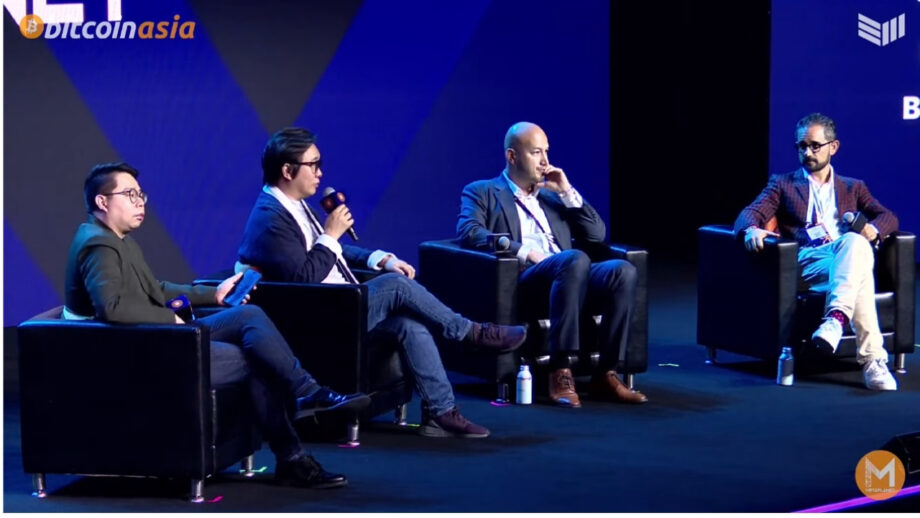
At the Nakamoto Stage of Bitcoin Asia in Hong Kong, a panel of industry leaders gathered to dissect one of the most pressing questions in digital finance: will stablecoin regulation unlock institutional Bitcoin adoption across Asia, or will it inadvertently become a bottleneck?

Moderated by Caspar Wong of Web3Labs, the panel featured Anndy Lian, best-selling author of Web4: The Age of Autonomous Intelligence; Benjamin Quinlan of Quinlan & Associates Limited; and Ben Berenson of Asia SGE. Wong framed the discussion succinctly: “Stablecoins are the bridge between traditional finance and the crypto and Bitcoin ecosystem.” The question, he posed, was whether emerging rules would serve “as a catalyst for institutional Bitcoin adoption or a bottleneck.”

A Fragmented Continent, A Fragmented Strategy

Asia’s regulatory landscape is anything but uniform. Anndy Lian was direct in his assessment: “Most of us would think that Asia operates like a block together, but actually it’s not. Each country is having their own rules.” He contrasted Hong Kong’s institution-driven approach with Singapore’s payment and AML focus, and South Korea’s innovation tempered by capital controls.

Lian echoed a call for harmonisation, suggesting “maybe we should have a more unified set of rules, maybe like a passport that you could use throughout the whole of Asia.” Yet he cautioned regulators against excess: “Have an open mind, have a good set of regulations, but not overreaching on everything. If you start to overreach on each and every aspect for stablecoin, it is very difficult for you to move from country to country.”

Ben Berenson offered a more pragmatic counterpoint. “There’s no pan-Asia unified system. It’s very local,” he said, arguing that the approach must begin at the operational level. “It starts with operations, and when you know how to build an operation in the right way, you gradually kind of fit yourself into the local regulation.” He also raised a pointed governance concern about the passport concept: “If you have a passport and you can get licensed in different jurisdictions based on one authoriser, then who do you blame when things go south?”

Benjamin Quinlan added a layer of nuance, noting that the relevance of stablecoin regulation depends heavily on how institutions access Bitcoin. “If you are an institutional investor and you are investing indirectly through ETFs or other related products, the stablecoin regulations are quite frankly irrelevant,” he said. “If you are looking at a direct access model, then it fundamentally will reflect upon your risk appetite to use non-regulated and/or regulated stablecoin on-off ramps.”

Catalyst or Constraint?

With Hong Kong’s Legislative Council having passed its stablecoin ordinance and two licensed issuers expected to launch in the fourth quarter, the panel examined whether comprehensive regulation would truly open the floodgates.

Lian argued that institutional hesitation stems less from regulation itself than from ambiguity. “The institutions are not worried about regulations, but they are more worried about uncertainties,” he said. “As long as the certainty is there, the regulations are ironclad, everything is there, I think that would not stop any institutions from adopting stablecoin.” He added a warning: “If we slap the traditional finance rules onto all these new stablecoins, that could become a deterrent.”

Quinlan highlighted Hong Kong’s deliberate regulatory design, noting that the two approved issuers were among the city’s three note-issuing banks. He saw this as a trust-building measure: “If a regulator decides they ultimately don’t want those unregulated stablecoins circulating in their jurisdiction, then it will create a natural impetus for these regulated stablecoins to be the correct and regulated and compliant conduit as an on-off ramp into Web3 assets.”

Berenson, meanwhile, cautioned against overlooking less glamorous but equally consequential rules. He pointed to Hong Kong’s new cybersecurity framework, noting that “no one asks how this impacts” crypto players because attention is fixated on the “big buzz around stablecoin.”

Bitcoin at the Centre

True to the conference’s ethos, the panel circled back to Bitcoin itself. Berenson proposed an inversion of the prevailing narrative: “Instead of looking at stablecoin as a settlement for Bitcoin, you can look at Bitcoin as a payment mechanism where the final leg settlement would be with a local issued compliant stablecoin.” He urged institutions to approach banks “in terms of assets rather than focus your strategy around stablecoin with hindrances towards Bitcoin.”

Lian agreed enthusiastically: “If it’s a Bitcoin strategy, I think it’s a bit more sexier than what we see right now. And using Bitcoin as a credit system would be an even more sexier thing.” He called on traditional banks to “come on-chain” and “reap the benefit and the yield on-chain together with us.”

Looking Ahead

In their closing remarks, each panellist painted a picture of the near future. Quinlan envisioned stablecoins becoming “almost indistinguishable” in everyday commerce, where the line between “a stablecoin as a digital asset versus a stablecoin being the equivalent of a digital fiat” dissolves. Lian looked further ahead, referencing his work on autonomous intelligence: “The future is not only about Web2 or Web3… the autonomous intelligence is going to come in and that is also going to create a hell of a lot of money flow.” His rallying cry was simple: “We should go on-chain, man.”

Berenson struck a cautiously optimistic note: “I think payments is a bigger focus right now rather than big banks and big regulations. Those things are in the right direction. So, I’m bullish.”

The consensus from the Nakamoto Stage was clear: stablecoin regulation in Asia will not be a single lightning-bolt moment but a slow, jurisdiction-by-jurisdiction negotiation. The institutions that thrive will be those that treat regulatory clarity not as a constraint, but as the foundation on which to build—and keep Bitcoin firmly at the centre of the strategy.

 

Anndy Lian is an early blockchain adopter and experienced serial entrepreneur who is known for his work in the government sector. He is a best selling book author. The latest book is Web4: The Age of Autonomous Intelligence.


j j j

Will BlackRock continue buying US$200M daily to push Bitcoin past the US$83,000 resistance wall?

Will BlackRock continue buying US$200M daily to push Bitcoin past the US$83,000 resistance wall?

The global digital asset landscape currently exhibits notable strength, with total cryptocurrency valuation climbing 1.38 per cent to US$2.7T in a single 24-hour period. This substantial expansion aligns closely with traditional equities, as the broader sector shows a 68 per cent correlation with the S&P 500. Investors clearly interpret these decentralised networks as high-beta risk instruments rather than isolated speculative vehicles. Such tight alignment indicates that macroeconomic liquidity and shifting monetary policy expectations primarily dictate current trajectories. Participants eagerly allocate funds to riskier classes while anticipating favourable financial conditions. This environment creates favourable conditions for sustained upward momentum across the ecosystem.

My analysis suggests that this structural shift reflects a maturing environment where large wealth managers dictate the prevailing trend rather than fleeting retail sentiment. This deep integration with traditional finance validates the long term viability of these networks as a permanent fixture in modern portfolio construction. Institutional allocators now view digital assets as essential diversification tools that capture asymmetric upside during fiat debasement.

Bitcoin leads the sector rally, advancing 1.76 per cent to reach a new trading value of US$80,235.47. The primary catalyst behind this specific appreciation involves relentless accumulation through United States spot exchange-traded funds. These financial products recorded their eighth consecutive day of net inflows, which aggregated US$232.12M on August 27. BlackRock significantly amplified this buying pressure when its iShares Bitcoin Trust executed a US$200.76M purchase on the same day. This specific acquisition signals strong conviction and provides a steady bid for the underlying asset.

Exchange-traded fund reserves have subsequently expanded by US$22B since the middle of August. Large deployments prove that cash-funded rallies currently dominate the market. Such tangible buying provides a much more durable foundation for appreciation than leverage-fuelled speculative spikes. When major asset managers commit this level of funds, they effectively establish a firm floor that limits severe downside volatility during routine corrections. This persistent accumulation pattern demonstrates that traditional finance giants view current price levels as highly attractive entry points for long-term strategic positioning.

Derivatives platforms significantly accelerated this spot-driven upward trajectory through a rapid liquidation sequence. Trading venues wiped out US$100.04M worth of Bitcoin positions over a single 24-hour period. Short sellers absorbed the majority of the financial impact, as US$67.73M in bearish bets were forced to close. This specific short liquidation volume represents a staggering 168.86 per cent surge from the previous trading session. Overall wiped-out volume also reflects an 85 per cent increase compared to prior daily metrics. These forced buybacks created a powerful feedback loop that pushed valuations even higher. The premier digital asset now faces immediate technical hurdles as it approaches the 50-week moving average situated near US$81,085.

A formidable supply wall also exists between US$81,000 and US$86,000. The asset must hold firmly above the US$80,000 psychological threshold to successfully test the US$83,000 resistance zone. A failure to maintain this crucial support level risks a severe pullback toward the 200-day exponential moving average near US$76,000 following a break below US$78,200. Traders must recognise that overcoming this specific supply barrier requires immense spot volume to absorb the existing sell orders resting at those elevated tiers. Market makers will monitor order book depth to gauge whether buyers possess sufficient capital to clear this overhead resistance.

Ethereum is up 0.97 per cent, reaching a current valuation of US$2,513.71. This specific action perfectly mirrors the overarching trend, in which the total ecosystem valuation advanced 1.85 per cent and the leading asset gained 1.95 per cent. The smart contract network currently functions primarily as a high-beta proxy for general sector strength rather than an independent store of value. The CryptoMarket Fear and Greed Index currently reads 82, which officially indicates extreme greed among participants. This elevated sentiment confirms that bullish expectations permeate the entire ecosystem.

Ethereum faces immediate hurdles near the US$2,600 level after struggling to breach it in recent weeks. Maintaining a position above the US$2,500 support zone remains absolutely crucial for preserving the short-term bullish structure. A breakdown below US$2,450 would inevitably trigger a correlated retracement toward the US$2,400 mark. The network lacks a unique internal catalyst at this precise moment, which leaves its immediate destiny entirely bound to the broader trajectory. Network upgrades and scaling solutions must eventually materialise to decouple its performance from pure beta momentum and establish independent fundamental value. Developers must deliver tangible improvements to transaction throughput to justify higher independent valuations.

The broader ecosystem experiences significant rotation as regulated access expands rapidly across multiple platforms. Charles Schwab recently expanded its massive US$13T wealth management platform to include direct trading in Solana and Avalanche, alongside Chainlink. This strategic expansion increases regulated access for traditional finance clients seeking exposure to alternative networks. BlackRock also demonstrated immense confidence in the broader ecosystem, as its Ethereum-specific exchange-traded fund attracted US$889.8M in net purchases over eight consecutive trading days ending August 27.

This sustained demand fuels selective momentum across various alternative tokens despite the Altcoin Season Index dropping 2.7 per cent to settle at 36. Bitcoin dominance currently stands at 59.7 per cent, indicating that funds still heavily favour the premier digital asset. Specific alternative tokens demonstrate remarkable independent strength as Solana surges 8.6 per cent and VeChain climbs 11.27 per cent within the same day. These selective gains prove that smart money actively identifies specific utility-driven protocols while ignoring purely speculative projects. Institutional gatekeepers now filter the landscape to offer clients exposure to networks with verifiable utility and robust developer activity. Wealth advisors increasingly recommend these specific altcoins to clients seeking enhanced portfolio returns beyond standard allocations.

Participants now await several crucial macroeconomic triggers that will dictate the next major directional move. Federal Reserve Chair Kevin Warsh will deliver his Jackson Hole keynote address on August 29. Investors will scrutinise his phrasing for dovish indications that might support a decisive break above the US$83,000 resistance tier. Unexpected hawkish commentary risks shattering the current bullish structure and triggering widespread profit-taking.

The financial community will also monitor the Bank of Japan’s September 18 rate decision for potential volatility spillovers. The current rally rests on a sound foundation built upon tangible buying and expanding regulated access. Technical indicators suggest that the sector is showing a slight extension in the short term. A period of consolidation near current elevated valuations appears highly probable before the next major trend continuation occurs. Sustaining daily exchange-traded fund inflows above US$200M will provide the necessary fuel to overcome supply barriers.

My final take is that the structural uptrend remains fully intact, provided that conviction does not waver during these critical announcements. Observers must remain vigilant as liquidity conditions can shift rapidly when central banks adjust future interest rates. Prudent risk management protocols will protect capital during these unpredictable macroeconomic transitions.


Source: https://e27.co/will-blackrock-continue-buying-us200m-daily-to-push-bitcoin-past-the-us83000-resistance-wall-20260828/

Anndy Lian is an early blockchain adopter and experienced serial entrepreneur who is known for his work in the government sector. He is a best selling book author. The latest book is Web4: The Age of Autonomous Intelligence.

j j j

Who really moves Bitcoin now: nine straight days of Fidelity buying exposes the new power structure

Who really moves Bitcoin now: nine straight days of Fidelity buying exposes the new power structure

I observe that the digital asset sector’s total valuation has expanded to US$2.66T, up 0.98 per cent over the last 24 hours. This upward trajectory reflects a distinct shift in financial mechanics, in which regulated allocation dictates price action more than retail speculation. My analysis reveals an ecosystem that is heavily influenced by macroeconomic forces and traditional investment vehicles rather than by isolated technological breakthroughs.

The broader crypto landscape currently shares a 59 per cent correlation with the S&P 500 and a 67 per cent correlation with gold. These statistical relationships highlight how traditional financial narratives now dominate digital asset pricing models. Investors clearly treat these tokens as alternative stores of value and macro-sensitive instruments. This convergence is a permanent maturation of the asset class. The alignment with traditional equities and precious metals proves that large capital allocators view digital assets through the same risk-management lenses they apply to legacy markets.

Regulated exchange-traded funds continue to absorb massive amounts of underlying assets, driving the current bullish momentum. United States spot Bitcoin exchange-traded funds accumulated 4,038 Bitcoin tokens, representing US$316.54M in fresh capital, on August 26. Ethereum investment products simultaneously attracted 75,150 Ether tokens, totalling US$184.32M. This aggressive accumulation provides a robust foundation for price appreciation.

Fidelity clients have acted as net buyers for nine consecutive days, underscoring a persistent and deliberate allocation strategy by traditional finance giants. I view this consistent daily buying pressure as the primary engine sustaining the current rally. Retail traders often chase momentum, but institutional desks execute systematic accumulation strategies that anchor the price floor.

The continuous injection of massive amounts of daily capital through regulated channels completely alters supply dynamics. Participants must closely monitor the daily flow data because sustained inflows are absolutely necessary to maintain this upward trajectory. Wall Street desks now control the marginal pricing of these assets because their sheer volume overwhelms organic retail demand.

Bitcoin registered a modest 0.63 per cent increase to US$78,852.61, slightly underperforming the broader sector’s 1.1 per cent gain. This divergence stems directly from the macro-driven nature of the current rally. The leading cryptocurrency currently exhibits a strong 71 per cent correlation with gold over this specific period. Analysts attribute this synchronised movement to renewed focus on United States Treasury buybacks in long-dated bonds and ongoing currency debasement trades.

This price action is clear evidence that the premier digital asset currently functions primarily as a macro instrument. Traders react to shifts in global liquidity and currency expectations rather than internal ecosystem developments. The lack of a distinct coin-specific catalyst further supports this macro thesis. The modest price increase aligns perfectly with residual positioning flows rather than the start of a brand-new explosive trend. Observers must monitor changes in the 10-year Treasury yield and the DXY index, as these traditional metrics directly influence the direction of this trade.

Trading volume for the leading cryptocurrency fell by 36.9 per cent, indicating a lack of aggressive new buying from speculative participants. Positive regulatory developments also amplify the current uptrend and encourage broader participation. Social media platforms are buzzing with anticipation about the upcoming Senate vote on the CLARITY Act, which lawmakers have scheduled for September 15. This legislation promises to provide permanent regulatory clarity for the entire digital asset sector.

I believe the ecosystem aggressively prices in this reduced regulatory risk, which encourages traditional institutions to allocate capital without fear of sudden enforcement actions. This optimism is evident in the current Fear and Greed Index reading of 81, indicating extreme greed among participants.

While high sentiment readings validate the bullish trend, they also suggest the environment may be overextended in the short term. Traders often buy the rumour and sell the news, so this extreme greed warrants careful risk management. Participants should track the progress of the CLARITY Act and watch for any sudden shifts in sentiment metrics, as these elements will dictate near-term volatility.

Technical indicators paint a clear picture of the immediate hurdles and support zones for both the total landscape and individual tokens. The overall digital asset direction in the coming week hinges entirely on the US$2.54T support level, which represents the 23.6 per cent Fibonacci retracement. If institutional inflows continue, the total capitalisation could easily test the recent high near US$2.66T again. A break below US$2.54T would signal a distinct shift in momentum and trigger a deeper pullback toward US$2.47T.

The market is currently in a holding pattern, testing whether recent gains can hold without an immediate catalyst. Maintaining structural integrity requires continuous capital injection to fend off profit-taking. I maintain that the structural integrity of this rally depends entirely on these daily capital injections. Without consistent buying, the ecosystem will likely succumb to profit-taking and revert to lower support zones. Algorithmic trading models place heavy weight on these specific Fibonacci levels when executing large block trades.

Bitcoin faces its own specific technical battleground as it consolidates between the Fibonacci support zone of US$78,290 to US$78,490 and resistance near US$79,340. The 61.8 per cent retracement level at US$78,290 provides a crucial floor for the leading cryptocurrency. The seven-day Relative Strength Index currently sits at 57.08, suggesting neutral momentum and leaving room for movement in either direction. A daily close above US$79,340 would signal a definitive breakout, while a break below US$78,290 would indicate a deeper pullback toward US$77,640.

Market participants eagerly await the next United States spot Bitcoin exchange-traded fund flow data, due on August 27, to gauge whether institutional demand can reignite bullish momentum. A seven-day streak of positive inflows sets a high bar for the upcoming reports. I firmly believe that disciplined observation of these specific data points will separate successful traders from those who suffer unnecessary losses during sudden corrections.


Source: https://e27.co/who-really-moves-bitcoin-now-nine-straight-days-of-fidelity-buying-exposes-the-new-power-structure-20260827/

Anndy Lian is an early blockchain adopter and experienced serial entrepreneur who is known for his work in the government sector. He is a best selling book author. The latest book is Web4: The Age of Autonomous Intelligence.

j j j