What does the recent Bitcoin crash mean for crypto investors?

What does the recent Bitcoin crash mean for crypto investors?

The financial markets currently present a fascinating divergence between traditional equities and digital assets. Investors actively rotate capital out of high-technology names and into defensive sectors. The crypto market experiences a severe deleveraging event at the exact same time. We witness the traditional gambling halls of Wall Street pivot toward safety while the crypto casino clears out overleveraged participants. This dynamic offers a perfect lens to examine the convergence of artificial intelligence, decentralised finance, and macroeconomic policy.

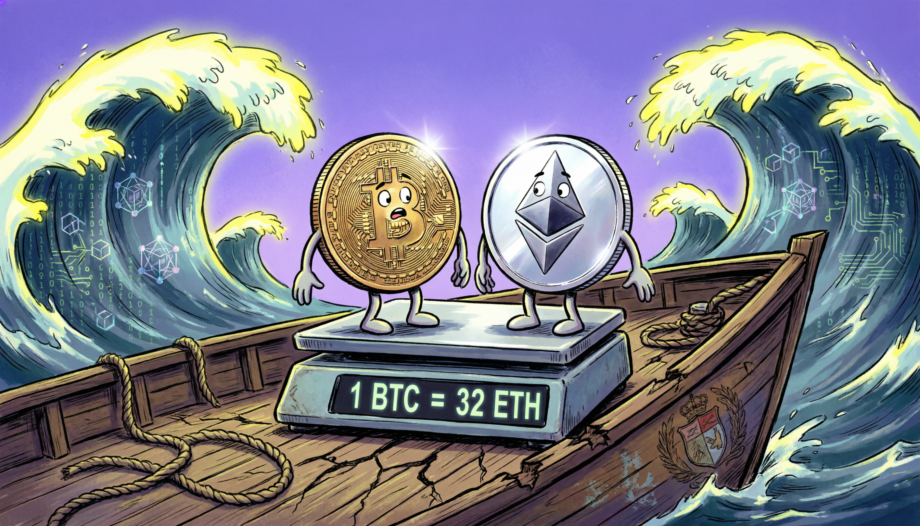
Bitcoin slid from the mid-US$70,000 range down to intraday lows around US$61,300 between June 2 and June 4. This drop marks the weakest level since early February and completely wiped out approximately US$1.6 billion in leverage. Derivatives trackers confirm that exchanges liquidated roughly US$1.2 billion to US$1.8 billion in leveraged positions over 24-hour periods. Long positions took the vast majority of this hit while open interest reset to lower levels.

Altcoins tracked this downward trajectory perfectly. Solana and Cardano dropped to multi-year lows while XRP logged steep drawdowns and new year-to-date lows. Furthermore, US spot Bitcoin ETFs endured 13 straight sessions of net outflows, draining about US$4.3 billion to US$4.4 billion since May 15. BlackRock IBIT drove much of this selling pressure. MicroStrategy also disclosed a sale of 32 BTC on June 1, marking its first sale since 2022. While small relative to total holdings, the market interprets this as a sentiment signal. I see this purely as a necessary cleansing of speculative excess. The market must clear out weak hands before any sustainable upward movement can occur. We now watch whether Bitcoin holds support in the low US$60,000 range and whether ETF flows stabilise.

Traditional equity markets tell a completely different story of rotation rather than outright retreat. The Dow Jones Industrial Average surged 1.7 per cent to a record close as investors actively pulled money out of artificial intelligence stocks. The S&P 500 rose 0.4 per cent while the Nasdaq closed completely flat. This stagnation in the technology-focused index stems directly from Broadcom plunging 12 per cent. The market executed a notable pivot from technology, semiconductors, and memory stocks into defensive pockets like healthcare, financials, telecommunications, and real estate.

UnitedHealth, JPMorgan, Costco, and Eli Lilly led these gains outside the technology sector. The Russell 2000 also performed exceptionally well, closing exactly one point off a fresh record high and outperforming the broader indices of large companies by a wide margin. This behaviour perfectly illustrates my long-held view that public markets will regain popularity among entrepreneurs and provide broader access to investment opportunities, but only when valuations reset to rational levels. Investors simply refuse to pay premium multiples for tech stocks right now.

Corporate earnings data reinforces this rotation away from pure artificial intelligence hype. Broadcom reported second-quarter fiscal 2026 revenue up 48 per cent to US$22.19 billion. This figure narrowly missed consensus expectations. Their artificial intelligence revenue surged 143 per cent to US$10.8 billion. The company reiterated rather than raised its fiscal 2027 artificial intelligence target above US$100 billion, prompting the massive 12.5 per cent drop in shares.

CrowdStrike delivered first-quarter fiscal 2027 revenue up 26 per cent to US$1.39 billion, beating consensus by around 2 per cent. Earnings per share hit US$1.10, beating estimates, and shares still fell 3.8 per cent on soft guidance. The market demands absolute perfection from these technology names and punishes any hint of deceleration. This creates an environment where speculative financial activities like stock trading feel exactly like gambling, just with slightly better odds than traditional casinos.

We also see a monumental shift in how capital markets value the convergence of physical and digital infrastructure. SpaceX set terms for a record US$75 billion initial public offering at a staggering US$1.75 trillion valuation. The company will sell 555.6 million shares at US$135 each, making this the largest IPO in history. Trading begins June 12 under the ticker SPCX. Lead investment bank Goldman Sachs expects the company’s artificial intelligence revenues to surge 100x by 2030 to US$322 billion. This projection aligns perfectly with my research on Web4, where artificial intelligence and physical network infrastructure merge to create entirely new economic layers.

The market recognises that the next generation of value creation will not come from pure software but from the integration of intelligent systems with global connectivity. This specific intersection defines the core thesis of my upcoming book on Web4. We are moving past simple digital ledgers into an era where autonomous agents manage decentralised networks. The sheer scale of this SpaceX offering proves that institutional capital finally understands this major technological shift.

Geopolitical developments also played a crucial role in shaping market sentiment during this period. Brent crude oil fell 2.0 per cent to US$95.35 after Israel and Lebanon agreed to a ceasefire. This agreement lifted hopes for a broader deal between the United States and Iran and a potential reopening of the Strait of Hormuz.

Although negotiations between the United States and Iran remain in a deadlock, statements indicating a desire to avoid restarting attacks provided some relief to energy markets. This reduction in geopolitical risk premium directly supports the rotation into defensive equities and removes a major headwind for global economic growth.

Macroeconomic indicators present a mixed picture, further complicating the investment landscape. US initial jobless claims rose to 225,000, missing the forecast of 214,000 and increasing from 212,000 the prior week. Markets now await May nonfarm payrolls, with consensus expecting around 85,000 jobs, down from 115,000 in April. A third straight month of gains would signal a resilient labour market despite higher interest rates.

Meanwhile, Eurozone retail sales fell 0.4 per cent month on month in April, performing worse than the expected 0.3 per cent decline following a 0.8 per cent rise in March. These diverging economic signals force investors to make difficult choices. They must balance the resilience of the American worker against the fragility of the European consumer. This exact tension drives the current market volatility and dictates the flow of global capital.

Ultimately, we observe a massive reallocation of capital across all asset classes. The crypto market must complete its deleveraging phase, and a slowdown in forced liquidations, combined with improving US spot Bitcoin ETF demand, will signal the exhaustion of this downtrend.

Simultaneously, traditional markets are pricing in a new reality in which artificial intelligence companies must deliver flawless execution to justify their valuations. The SpaceX IPO represents the ultimate test of this new standard, bridging the gap between physical space infrastructure and digital intelligence.


Anndy Lian is an early blockchain adopter and experienced serial entrepreneur who is known for his work in the government sector. He is a best selling book author- “NFT: From Zero to Hero” and “Blockchain Revolution 2030”.

Currently, he is appointed as the Chief Digital Advisor at Mongolia Productivity Organization, championing national digitization. Prior to his current appointments, he was the Chairman of BigONE Exchange, a global top 30 ranked crypto spot exchange and was also the Advisory Board Member for Hyundai DAC, the blockchain arm of South Korea’s largest car manufacturer Hyundai Motor Group. Lian played a pivotal role as the Blockchain Advisor for Asian Productivity Organisation (APO), an intergovernmental organization committed to improving productivity in the Asia-Pacific region.

An avid supporter of incubating start-ups, Anndy has also been a private investor for the past eight years. With a growth investment mindset, Anndy strategically demonstrates this in the companies he chooses to be involved with. He believes that what he is doing through blockchain technology currently will revolutionise and redefine traditional businesses. He also believes that the blockchain industry has to be “redecentralised”.

j j j

A 65% probability explains the next likely move for Bitcoin as leverage clears

A 65% probability explains the next likely move for Bitcoin as leverage clears

Bitcoin faces intense downward pressure, tumbling over 6.09 per cent in a 24-hour window to US$66,867.60. This sharp correction means the premier digital asset is notably underperforming the broader cryptocurrency market, which itself fell by 5.39 per cent over the same period.

The velocity of this descent suggests that a complex interplay of excessive leverage, cooling institutional appetite, and structural liquidations has fundamentally transformed what could have been a standard market correction into a disorderly retreat. For observers tracking these capital flows, this pronounced vulnerability highlights how deeply the cryptocurrency ecosystem remains bound to sudden changes in market sentiment and leveraged positioning.

At the very core of this steep price drop sits a massive derivatives-driven liquidation cascade that completely transformed the market dynamics over a 24-hour period. Leveraged long positions worth nearly US$789 million were completely wiped out, forcing automated and non-discretionary market selling that triggered a painful feedback loop. This volume of liquidations represents an astonishing 172 per cent surge over the prior day, proving that retail and institutional traders alike were positioned far too aggressively on the long side.

As prices breached psychological support levels at US$70,000 and US$68,000, exchange liquidation engines automatically dumped collateral into an increasingly illiquid spot market, thereby amplifying the decline’s velocity. Market stabilisation now depends entirely on whether funding rates and open interest can stabilise, signalling that this aggressive excess leverage has been thoroughly cleared from the system.

Compounding this structural selling pressure is a visible erosion of institutional confidence, a pillar that many believed would permanently anchor prices throughout the year. For the 11th consecutive day, spot Bitcoin exchange-traded funds registered persistent capital withdrawals, with total aggregate outflows reaching US$3.45 billion.

This prolonged streak of capital flight indicates a broader risk-off rotation as professional allocators quietly shift their capital out of digital assets and reallocate it directly into outperforming traditional equities, with artificial intelligence stocks attracting the vast majority of this liquidity.

Furthermore, sentiment suffered a sharp psychological shock following reports that MicroStrategy executed its first Bitcoin sale since 2022. Even though the transaction was minor, it shattered the firmly held market narrative that the corporate treasury would exclusively accumulate and never sell its holdings, introducing an element of doubt that further spooked already nervous participants.

Bitcoin has officially pushed deep into oversold territory, with its 14-day relative strength index collapsing down to 29.09. The digital asset is currently testing a critical floor between its recent swing low of US$66,127 and the 78.6 per cent Fibonacci retracement level located at US$67,300. If buyers fail to defend this crucial US$66,127 mark, the structural bearishness will likely intensify and open up a direct path toward US$64,000.

Conversely, if exchange-traded fund outflows finally begin to slow or turn neutral today, a successful defence of this support zone could easily spark a quick relief rally back toward the 50 per cent Fibonacci level at US$68,868.

The current assessment points to a market dominated by strong bearish momentum, where the combination of aggressive liquidations and a cooling institutional bid has firmly handed control over to the sellers. While deeply oversold conditions frequently precede a sharp technical bounce, any near-term recovery will likely remain incredibly weak and highly vulnerable until the asset reclaims and stabilises above its key overhead resistance zones.

Risk managers must keep a vigilant eye on today’s exchange-traded fund data to see if institutional selling pressure is showing signs of exhaustion, while simultaneously watching whether the spot price can successfully defend its current support lines.

Evaluating the probabilities for how this market structure will evolve over the coming days reveals three distinct tactical scenarios for risk allocators to monitor. The primary scenario carries a 65 per cent probability and envisions Bitcoin staging a modest technical bounce from its current oversold conditions to retest US$68,868, before ultimately succumbing to the overarching bearish trend and resuming its decline toward US$64,000. There is a secondary 25 per cent probability that the selling pressure has already peaked, which would allow the asset to firmly establish a long-term bottom right here and begin a sustained, grinding recovery that targets a full reclaim of US$70,000.

Finally, a minor 10 per cent probability exists for an immediate, catastrophic continuation of the liquidation event, a worst-case scenario that would bypass any intermediate consolidation and plunge the asset straight through US$64,000 down to deeper macro support levels.

Let’s see.


Source: https://e27.co/a-65-probability-explains-the-next-likely-move-for-bitcoin-as-leverage-clears-20260603/

Anndy Lian is an early blockchain adopter and experienced serial entrepreneur who is known for his work in the government sector. He is a best selling book author- “NFT: From Zero to Hero” and “Blockchain Revolution 2030”.

Currently, he is appointed as the Chief Digital Advisor at Mongolia Productivity Organization, championing national digitization. Prior to his current appointments, he was the Chairman of BigONE Exchange, a global top 30 ranked crypto spot exchange and was also the Advisory Board Member for Hyundai DAC, the blockchain arm of South Korea’s largest car manufacturer Hyundai Motor Group. Lian played a pivotal role as the Blockchain Advisor for Asian Productivity Organisation (APO), an intergovernmental organization committed to improving productivity in the Asia-Pacific region.

An avid supporter of incubating start-ups, Anndy has also been a private investor for the past eight years. With a growth investment mindset, Anndy strategically demonstrates this in the companies he chooses to be involved with. He believes that what he is doing through blockchain technology currently will revolutionise and redefine traditional businesses. He also believes that the blockchain industry has to be “redecentralised”.

j j j

Why US$73,000 is the most important Bitcoin level right now

Why US$73,000 is the most important Bitcoin level right now

The crypto market entered June with a measured pullback, declining 0.71 per cent to a total capitalisation of US$2.49 trillion over the past 24 hours. This movement reflects Bitcoin-led weakness rather than a sector-wide crisis, and it arrives as global financial markets digest a powerful May rally that pushed Wall Street to historic highs.

Bitcoin’s dominance sits at 59.22 per cent, underscoring its role as the primary driver of sentiment across digital assets. When Bitcoin sneezes, the rest of the market catches a cold, and today’s action reinforces that dynamic. Institutional caution remains palpable, with US spot Bitcoin ETFs recording their ninth consecutive day of net outflows totalling US$2.84 billion.

A single US$1.26 billion block sale of BlackRock’s IBIT shares highlights how large investors are rapidly adjusting their exposure. This persistent selling pressure creates a headwind that spot buyers have struggled to absorb, and it signals a cooling of institutional demand that warrants close attention.

What strikes me as particularly noteworthy is the 81 per cent correlation between Bitcoin and gold during this period. This strong relationship suggests that both assets are being positioned as inflation hedges amid macro uncertainty, rather than moving on crypto-specific fundamentals. Investors appear to be treating Bitcoin as a risk bellwether within a broader macro-driven beta play. The Fear and Greed Index reading of 35, firmly in fear territory, amplifies this cautious posture.

Market participants are not panicking, but they are not chasing risk either. This measured sentiment creates a fragile equilibrium in which technical levels and macro catalysts exert outsized influence over near-term direction. This is a rational response to an uncertain macro backdrop, not a signal of fundamental weakness in digital assets.

Bitcoin’s ability to hold above US$73,000 represents a critical weekly close level that analysts are watching closely. The price recently broke below the US$75,000 to US$76,000 support zone, confirming a bearish continuation pattern and inviting further selling pressure.

Over the past day, the market saw US$10.04 million in BTC liquidations, with longs outnumbering shorts, indicating that some leveraged positions were forced to close on the dip. While this liquidation figure remains modest relative to the market’s size, it demonstrates how sensitivity to leverage persists even in mature market conditions. The immediate support confluence now sits between US$70,000 and US$72,000.

A hold above US$72,000, combined with a decline in ETF outflows, could spark a corrective bounce toward the US$75,000 resistance area. A decisive break below US$70,000 risks accelerating declines toward the US$65,000 to US$66,000 zone, which would mark a more significant technical deterioration.

The ETH-to-BTC ratio remains a key metric to monitor for signs of rotation back into alternative assets, while derivatives funding rates – which turned positive at 0.007 per cent – remain volatile and reflect the market’s uncertain posture. When project-specific issues compound macro-driven caution, the result is a market that lacks clear directional conviction and remains vulnerable to sudden shifts in sentiment. This environment rewards selectivity and patience over broad exposure.

Global context matters as well. The US Dollar Index gained minor ground but remains near recent multi-week lows around the 99.00 threshold, which typically provides a modest tailwind for risk assets. Energy markets experienced volatility, with Brent Crude climbing roughly two per cent to US$92.94 per barrel and WTI rising to just under US$89 per barrel.

This rebound follows a massive 17 per cent drop in WTI in May and reflects ongoing geopolitical tensions surrounding an elusive US-Iran deal. President Donald Trump scheduled a Situation Room meeting to assess next steps regarding the Iranian nuclear profile, keeping a proposed 60-day ceasefire and the total reopening of the Strait of Hormuz in limbo. These geopolitical dynamics influence inflation expectations and central bank policy, creating second-order effects for crypto markets.

This pullback represents cautious consolidation rather than a structural breakdown. The crypto market has matured to the point where it responds to macro signals with increasing sophistication, and the strong correlation with gold reflects this evolution. Investors are not abandoning digital assets, but they are recalibrating exposure in light of persistent ETF outflows and uncertain macro data.

This is a healthy digestion phase after a powerful May rally that saw the Nasdaq surge over 8 per cent and the S&P 500 book a roughly 5 per cent gain. Markets do not move in straight lines, and periods of consolidation often set the stage for the next leg higher. The long-term trajectory of digital assets remains compelling, but the market’s short-term uncertainty warrants respect.

What to watch for next is straightforward. A daily close below US$2.47 trillion in total market cap would target the next support near US$2.3 trillion and warrant a more defensive posture. Conversely, a reversal in spot ETF flow trends back toward net inflows would signal renewed institutional interest and could ignite a relief rally.

Bitcoin’s reaction to the US$72,000 level remains the most immediate technical cue, while any signals from the Bank of Japan’s policy speech on 3 June could impact global liquidity conditions. Manufacturing data from the ISM and China, Eurozone inflation readings, and the US payrolls report will collectively shape the macro backdrop.

In this environment, independent analysis matters more than ever. Mainstream narratives often oversimplify complex market dynamics, and each catalyst deserves evaluation on its own merits rather than following the crowd.

The coming weeks will test conviction, but they will also reveal opportunities for those prepared to act when clarity emerges.

Source:
 

Anndy Lian is an early blockchain adopter and experienced serial entrepreneur who is known for his work in the government sector. He is a best selling book author- “NFT: From Zero to Hero” and “Blockchain Revolution 2030”.

Currently, he is appointed as the Chief Digital Advisor at Mongolia Productivity Organization, championing national digitization. Prior to his current appointments, he was the Chairman of BigONE Exchange, a global top 30 ranked crypto spot exchange and was also the Advisory Board Member for Hyundai DAC, the blockchain arm of South Korea’s largest car manufacturer Hyundai Motor Group. Lian played a pivotal role as the Blockchain Advisor for Asian Productivity Organisation (APO), an intergovernmental organization committed to improving productivity in the Asia-Pacific region.

An avid supporter of incubating start-ups, Anndy has also been a private investor for the past eight years. With a growth investment mindset, Anndy strategically demonstrates this in the companies he chooses to be involved with. He believes that what he is doing through blockchain technology currently will revolutionise and redefine traditional businesses. He also believes that the blockchain industry has to be “redecentralised”.

j j j