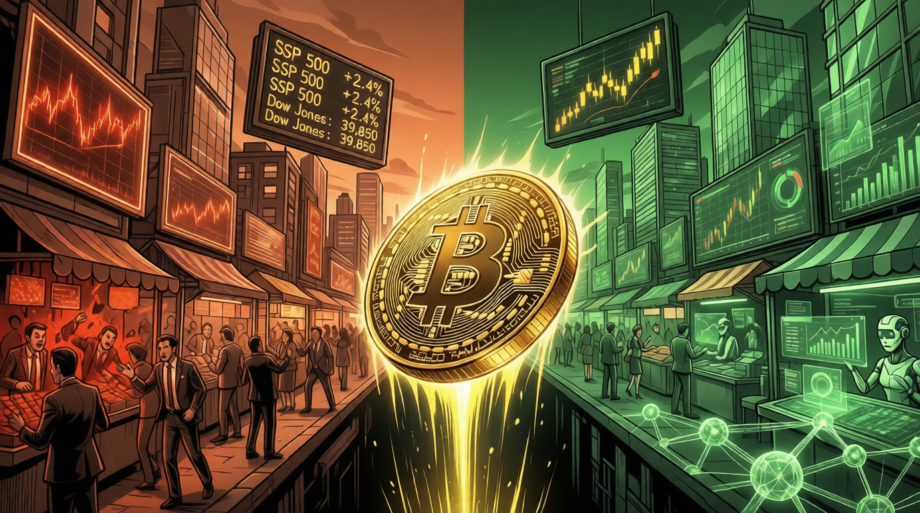
Bitcoin recently climbed 0.96 per cent to reach US$62,994.44 over the last 24 hours. This slight outperformance against a flat broader market highlights a profound shift in investor psychology. We currently witness a strong correlation between digital assets and traditional risk instruments. This dynamic proves that macroeconomic forces now dictate cryptocurrency price action far more than isolated blockchain developments.
These movements through a lens of institutional liquidity and macroeconomic correlation. Speculative financial activities like cryptocurrency trading often resemble gambling, but they offer better odds than traditional casinos when participants understand the underlying macroeconomic drivers.
The current rally stems primarily from improved global sentiment rather than any fundamental upgrade to the Bitcoin network. We must look at the broader economic picture to understand this price discovery phase. Recognising these underlying patterns allows us to separate genuine market shifts from temporary noise.
The primary catalyst for this renewed risk appetite is the easing of geopolitical tensions between the United States and Iran. President Donald Trump stated on July 9 that Iran wants to negotiate a deal. This single comment immediately lowered oil prices and softened United States Treasury yields. Traders quickly realised that a broader military conflict remains unlikely.
Consequently, lower energy costs reduce the urgency for inflation hedging. This environment drastically improves liquidity conditions for speculative assets. When bond yields drop, capital naturally flows toward higher-risk instruments in search of better returns.
The market operates on these predictable liquidity cycles. We see this exact pattern repeat whenever geopolitical fears subside, and central bank policies hint at future easing. Investors simply rotate capital back into risk assets to capture yield. This relentless pursuit of returns defines the modern financial landscape and drives continuous asset price inflation.
Traditional equity markets clearly reflected this shift in sentiment on July 9. The S&P 500 climbed 60.93 points to close at 7,543.64, representing a 0.81 per cent gain. The Nasdaq Composite surged even higher, adding 336.24 points to reach 26,206.89, a 1.30 per cent increase. The Dow Jones Industrial Average also posted solid gains, rising 139.02 points to finish at 52,487.41.
Technology and artificial intelligence stocks led this charge in the American markets. The VanEck Semiconductor ETF jumped 2.5 per cent, while Micron Technology shares skyrocketed 4.5 per cent. Investors viewed the recent semiconductor sell-off as a prime buying opportunity. This massive influx of capital into technology shares perfectly mirrors the recovery we see in digital assets. Both sectors thrive on cheap liquidity and optimistic forward guidance. When the cost of capital decreases, valuation multiples expand across the board, benefiting growth-oriented companies the most.
Global markets followed this American optimism into the Asian trading sessions. The MSCI Asia Pacific Index climbed steadily, mirroring the Wall Street rally. South Korea experienced a massive surge, with the Kospi index rallying three per cent. SK Hynix drove this Asian momentum by raising US$26.5 billion in a massive American depositary receipt offering on the Nasdaq. This colossal capital raise underscores the insatiable global demand for artificial intelligence and semiconductor infrastructure.
International investors clearly recognise the long-term value of these technology sectors. This global capital flow reinforces the macroeconomic thesis driving both traditional equities and digital assets. We operate in a deeply interconnected global financial system where liquidity flows seamlessly across borders and asset classes.
Within the cryptocurrency ecosystem, we observe a clear defensive rotation toward high-liquidity assets. Bitcoin dominance rose to 58.35 per cent as capital fled smaller, riskier altcoins. The broader market sentiment remains deeply fearful, with the Fear and Greed Index sitting at a dismal 28. Despite this pervasive fear, spot trading volume held steady while derivatives volume plummeted 19.94 per cent.
This divergence tells a very specific story. Selective spot buying drove the recent rally, with no leveraged speculation. Smart money accumulates positions quietly when the masses panic. We need to see a rebound in stablecoin trading volume to confirm that fresh capital enters the ecosystem.
Until then, we merely witness existing capital reshuffling within the Bitcoin network. Observing these internal flows provides crucial insights into the true health of the broader digital asset ecosystem. Commodity and bond markets further validate this risk-on narrative.
United States crude oil settled at US$71.83 a barrel, while Brent crude dropped to around US$76 a barrel. The 10-year Treasury yield fell to 4.55 per cent, signalling a flight away from safe-haven government debt. Markets stabilised after an initial jump in oil prices when the interim ceasefire announcement caused temporary panic.
Technical indicators present a cautiously bullish near-term outlook with significant overhead resistance. Bitcoin currently consolidates just below the major resistance level of US$64,700. The 50-day simple moving average sits at US$65,624, presenting the first major hurdle. The 200-day simple moving average looms even higher at US$74,225, confirming that the medium-term structure remains corrective.
If buyers maintain control and hold the price above US$62,500, we could easily test that US$64,700 resistance. A break below US$61,300 opens the door for a swift drop toward US$60,000. The immediate direction hinges entirely on the US$1.4 billion options expiry happening today, July 10. Market makers will defend their positions aggressively around these key levels.
Traders must watch the daily close closely to confirm the next major trend. Ignoring these critical technical boundaries often leads to severe capital destruction in highly volatile markets. Traders quickly factored in a potential return to diplomatic negotiations. This entire sequence of events highlights the predictable nature of human psychology in financial markets. Fear drives prices down, and relief drives them back up.
As we navigate this complex landscape, we must rely on independent analysis rather than mainstream narratives. The convergence of macroeconomic policy, geopolitical events, and technical market structure will ultimately determine the future of our global financial infrastructure. True decentralisation requires us to understand these macro forces deeply.
We must also remain vigilant against the rise of Central Bank Digital Currencies, which threaten to introduce unprecedented surveillance into our daily financial lives. Preserving privacy and maintaining true decentralisation demand that we master these complex dynamics to successfully navigate the inevitable shifts in our rapidly evolving financial system.


Anndy Lian is an early blockchain adopter and experienced serial entrepreneur who is known for his work in the government sector. He is a best selling book author. The latest book is Web4: The Age of Autonomous Intelligence.